London’s contract catering industry has experienced a significant boom in 2024-25 since the pandemic, and is expected to continue into 2026. Among the many reasons behind the industry’s recent growth, here are a few that stick out.
The rise in hybrid-work models has drastically reshaped the working week, thus changing the consistency of service required. Adapting to the main archetypal industry leaders to shape services to fit. As always, identifying gaps in the catering market provides insight into what is going to be the next trend-defining practice.
In 2026, the pressure is on to target mid-to large firms, a focus on health and wellness, accountable sustainability pledges, and integrating data and digital solutions into contract catering solutions to streamline user experience, costs and flexibility.
The Current Landscape of Contract Catering in London
The Hybrid Revolution
Hybrid working models have caused noticeable disruption within the catering industry, and new catering models and strategies have evolved to meet the fluctuating headcounts, service consistency and marketability of catering for workers only in the office half of the time. As more creases in the learning curve of hybrid catering are ironed out, we can begin to notice how services can continue to evolve.
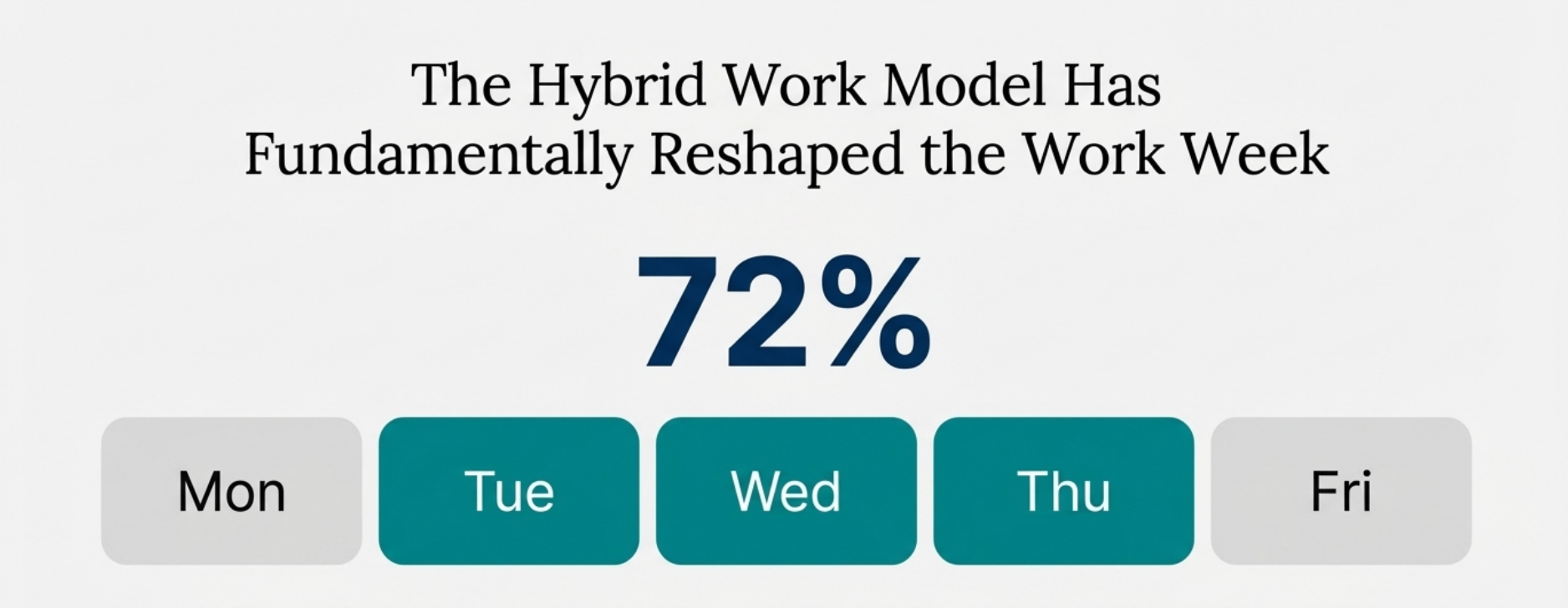
According to Just Eat Business, in place of the guaranteed 5-day working week, 72% of orders are now concentrated on midweek office deliveries. Throwing catering companies through a loop with operational pressures and higher value demands. Additionally, hybrid workers particularly value platter and shared meal types of lunch orders, rising by around 21%. Clearly showing the importance of communal meals being valuable within hybrid working environments, placing the value of connection over simply ordering food to tick a box.

Archetypal Profiles
The dominating archetypes leading the catering industry can be separated into 3 categories. Take a look at these examples and indicators of each.
- The Giants Large companies offering full services and on-site catering for large corporations. These companies compete on the scale and reach of their services and clients. Known for reliability and innovative tech. (Compass Group, Sodexo, BaxterStorey.)
- The Specialists Offering flexible services, including delivered-in and unique catering packages across corporations. Specialists prioritise culinary excellence, sustainability practice and forming strong partnerships with their clients. (Fooditude, Good Eating Company, Restaurant Associates)
- The Platforms Offering choice and aggregating multiple restaurant/catering services through app-driven marketplaces. These catering types compete on choice, familiarity of food brands, centralised billing and masses of variety for hybrid workers. (Deliveroo for Business, Feedr)
Emerging Gaps in the Market
Opportunities to distinguish catering services in 2026 fall under four categories:
- Mid-sized Firms.
- Offering health-focused extras to the base service.
- Truly dedicated to zero-waste.
- Digital and Data solutions for headcount forecasting.

To develop services fitting this criteria, catering companies must offer flexible, scalable services for smaller, mid and large companies alike. This could include altering service models for small companies without full canteens, but too large for spontaneous services.
 Building upon these services to provide value-added wellness services is vital. These could include nutrition expert-approved menus and dietitian consultations, a model that goes beyond ‘healthy options’.
 Corporations are beginning to tire of non-specific sustainability promises. Pledges and grand sweeping statements are not enough to convince climate-conscious clients that catering companies align with their values. Delivering zero-waste solutions and closed-loop systems for packaging and food waste is a great start.
 There is rising desirability in introducing tech that links office booking systems with catering orders to streamline headcount forecasting. This is a direct solution to the hybrid working model, particularly using new AI developments to tackle emerging operational pressures.
How to Thrive in the New Catering Landscape: A Guide.
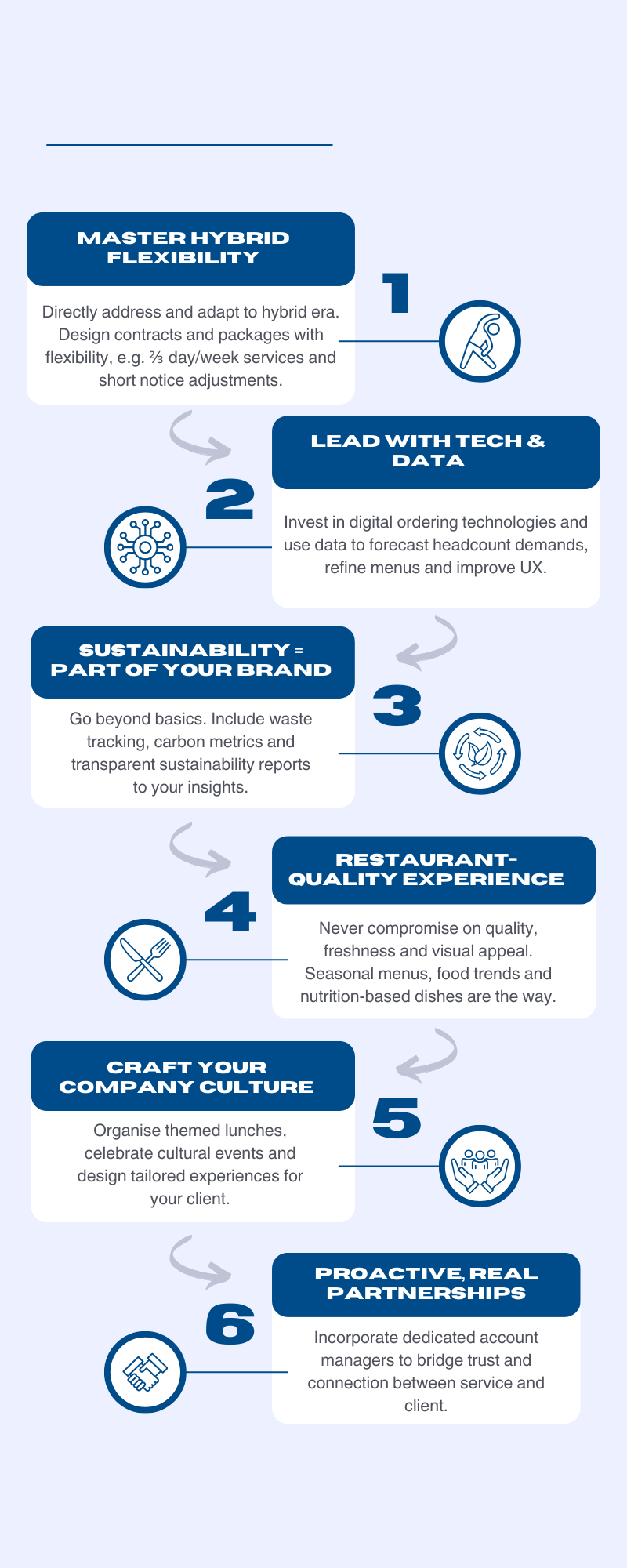
That is why the catering market has changed; let’s take a look at what to do about it. Here’s a 6-step guide on how catering companies can thrive in the hybrid, post-pandemic era. The main takeaway is this: Corporate catering in 2026 is all about experience over ‘just a meal’ ideologies.